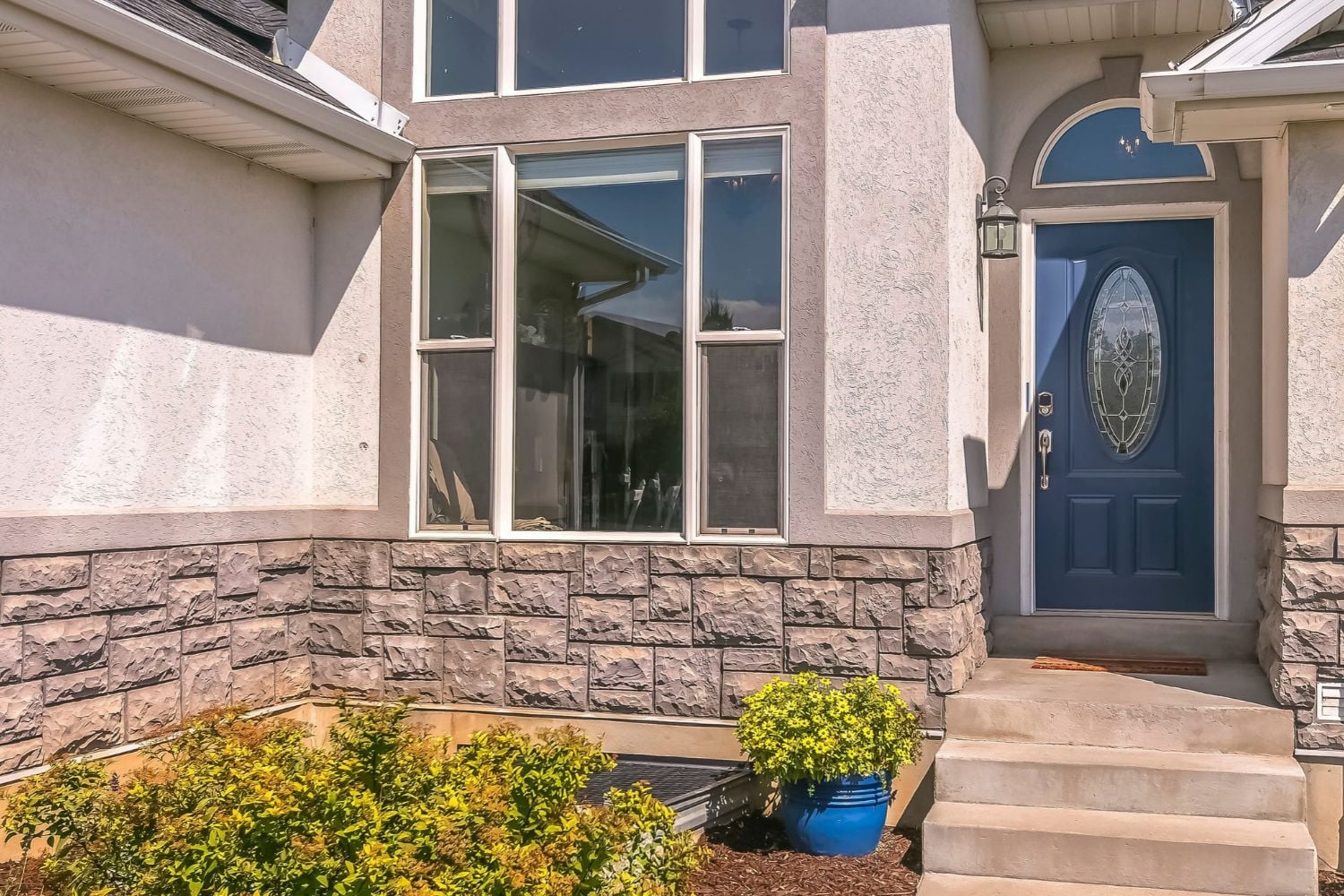
Water appearing around an exterior door can make the door itself seem like the obvious source of the problem. In reality, an exterior entryway is part of a larger wall system designed to manage rain, snowmelt, and runoff. When flashing, drainage components, sealants, or surrounding stucco fail, moisture can enter around the opening and travel into areas that are difficult to see. For Utah homeowners, multi-unit complex managers, and apartment complex managers, understanding how these systems work can help explain why recurring door leaks sometimes require more than surface sealing.
Exterior walls are designed to manage water and direct it toward the outside of the building. Door openings interrupt that protective assembly, creating transitions where multiple materials must work together.
A door opening may depend on sill pan flashing, side and head flashing, the water-resistive barrier, sealants, and exterior finishes working together. If one part of that system is missing, damaged, or improperly integrated, water can potentially move behind the visible exterior surface.
This is why water appearing around an exterior doorway should be evaluated as part of the surrounding wall system. The visible leak may be only one sign of a moisture problem developing within or around the opening.
Finding moisture near the bottom of a door does not necessarily mean water entered directly through the threshold. Water can originate at another point around the opening and travel through the surrounding assembly before becoming visible.
Potential problem areas can include deteriorated sealant around the frame, improperly integrated flashing, damaged stucco transitions, poor exterior drainage, or a sill pan that does not properly direct water outward. Conditions above or beside the doorway can also contribute to water reaching the opening.
This is why repeatedly applying caulk to a leaking doorway may not provide a lasting solution. Surface sealant can be appropriate when a failed sealant joint is actually responsible, but it cannot repair concealed flashing or drainage problems behind the exterior finish.
Sill pan flashing plays an important role at the bottom of exterior door openings by helping direct water away from the opening and toward the exterior.
When the sill pan is missing, damaged, improperly installed, or poorly integrated with surrounding water-management materials, moisture may reach the subfloor, framing, sheathing, or interior finishes.
Warning signs around an exterior doorway can include staining, deteriorating trim, damaged flooring, cracked stucco, recurring moisture after storms, or visible deterioration around exterior joints. These symptoms should be evaluated in relation to the entire opening rather than automatically being treated as a problem with the door itself.
Effective door leak repair begins by determining where water is entering and how it is moving through the exterior assembly. RAM Builders Stucco & Exteriors provides door leak repair for Utah properties, including homes, apartment complexes, and multi-unit communities.
Depending on the conditions found, repairs may involve investigating the source of water intrusion, accessing concealed components, repairing damaged substrates, installing or reconstructing sill pan flashing, integrating flashing with the water-resistive barrier, restoring stucco, and properly sealing the door perimeter.
A wet threshold is sometimes only the place where a larger exterior problem finally becomes visible. By evaluating the doorway as part of the surrounding wall and drainage system, RAM Builders Stucco & Exteriors can address the source of the water intrusion rather than simply covering the symptom.